
A History Shaped by Water
Flooding has played a significant role in Port Carbon’s history since the community’s earliest days. In 1827, construction began on the Schuylkill Canal extension from Mount Carbon to Port Carbon, creating a vital transportation link for the region’s coal industry. Coal wharves, canal locks, dams, and boat yards soon lined the riverfront, helping establish Port Carbon as an important center of commerce and transportation.
While the Schuylkill River and Mill Creek contributed to the Borough’s growth, they have also brought repeated flooding. Historical records document major floods in 1831, 1841, 1850, 1888, 1913, 1924, 1936, and 1972. Hurricane Agnes in 1972 caused widespread damage as floodwaters filled streets and basements throughout the Borough, resulting in millions of dollars in losses. More recently, significant flooding events in 2006 and 2018 again demonstrated the community’s ongoing vulnerability to high water.
Today, Port Carbon continues to work toward reducing flood risks through planning, education, watershed management, and flood mitigation projects. By understanding our history, we can better prepare for the future and build a more resilient community for generations to come.
Port Carbon’s Flood Risk
Port Carbon is particularly vulnerable to flooding due to its location along the Schuylkill River and Mill Creek, combined with the Borough’s low-lying terrain and surrounding topography. Flooding has affected the community throughout its history and continues to pose risks to homes, roads, utilities, and other infrastructure. The Borough’s flood information identifies Port Carbon as having an extreme flood risk, making preparedness and long-term mitigation especially important.
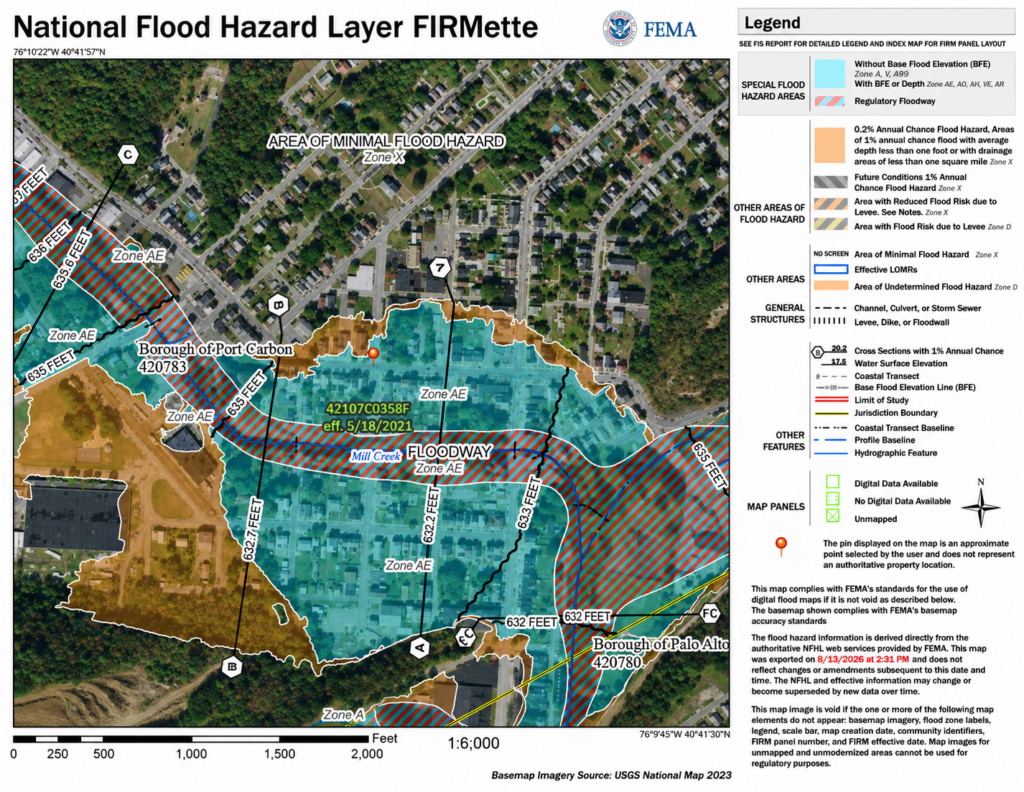
DO YOU KNOW YOUR FLOOD RISK?
Find out whether your home or property is located in a designated flood hazard area. Enter your address using FEMA’s official Flood Map Service Center.
[CHECK YOUR PROPERTY’S FLOOD RISK]
Before a Flood
Know your flood zone
Consider flood insurance
Protect utilities
Have an evacuation plan
During a Flood
Follow emergency instructions
Move to higher ground
Never drive through floodwater
Monitor weather alerts
After a Flood
Avoid standing flood water
Photograph damage
Contact your insurer
Watch for electrical hazards
Download our Flood Preparedness Brochure
Port Carbon Flood Preparedness Brochure
Flood Preparedness, Insurance & Under Resources
Floodplain Management:
These resources provide helpful information on flood risks, flood insurance, preparedness, and mitigation to help residents protect their homes, property, and finances from potential flooding.
Documents
Flood Risk & Insurance (Realtor Fact Sheet)
Flood Risk & Insurance (What to ask your insurance agent)
FEMA Protect Your Home (Flooding brochure 2020)
FEMA National Flood Insurance Program (Myths & Facts)
Guidelines for Maintaining Streams in Your Community
This guide provides practical information on stream maintenance, flood mitigation, and watershed management to help reduce flood risks, protect property, and improve stream health.
Documents
DEP Guidelines for Maintaining Streams
Flood Preparedness & Community Safety Resources
These resources provide practical guidance on flood preparedness, property protection, emergency response, and recovery to help residents stay safe and reduce potential flood damage.
Documents
Port Carbon Flood Risk & Preparedness Brochure
How to Prepare for a Flood (America PrepareAthon)
Committee Purpose & Membership
The Port Carbon Watershed Committee works to develop and support flood mitigation strategies that protect our community, improve watershed health, and strengthen resilience for future generations.
- Committee Chair: Bill Devers
- Committee Member: Megan Borowski
- Committee Member: Heather Maley
- Committee Member: James McBreen
- Committee Member: Cheryl Bolich
- Committee Member: Mike Welsh
- Committee Member: Ben Schuettler
Flood Plain Administrator
The Borough’s Floodplain Management Ordinance helps protect residents, property, and infrastructure from flood damage by regulating development in flood-prone areas. The Floodplain Administrator reviews permit applications, ensures compliance with state and federal floodplain regulations, conducts inspections, and helps maintain the Borough’s eligibility for the National Flood Insurance Program (NFIP).
Floodplain Administrator: Scott Krater (President of Borough Council)
The flood plain ordinance regulates construction and development in Port Carbon’s flood-prone areas. It requires permits and establishes building and floodproofing standards designed to protect residents and property, reduce future flood damage, and maintain compliance with state and federal floodplain requirements.
Chapter 130: Flood Plain Ordinance (2021-1)
Understanding Your Risk
